Polk County
Unveiling the Invisible Geographies of Racial Violence in Polk County, Florida
Lily Connolly
Unveiling Invisible Geographies
Through observations in public sites, including museums, parks and recreational spaces, this project examines geographical sites of racial violence in Polk County to explore how the past is—or is not—commemorated.
Located in central Florida, Polk County is home to sixteen incorporated cities, including Lakeland as its largest city. Lakeland and other cities, including Bartow (the county seat), Auburndale and Mulberry were selected for study due to their geographic proximity to each other.
While city officials highlight some of Polk County’s past in historical centers and library exhibits, these spaces often reflect a sanitized version of the past by omitting the racial violence experienced by Black communities. The selected sites include a tree in the center of the town of Mulberry where lynchings occurred, a public park that was both a site of racial violence and once housed a Confederate statue, and a beach that was historically segregated. This research project argues that all of these sites embody an ‘atmosphere of white memory.’ This term blends Eric Stanley’s (2021) theory of atmospheres of violence and Katherine Marie Gray’s (2023) framework of white memory by describing how public spaces white-wash history to reinforce dominant narratives that exclude histories of racial violence and Black resistance. By using these sites in Polk County as case studies, this project analyzes how Whiteness and colonial power overwrite the knowledge embodied in the land, thus creating atmospheres of white memory.
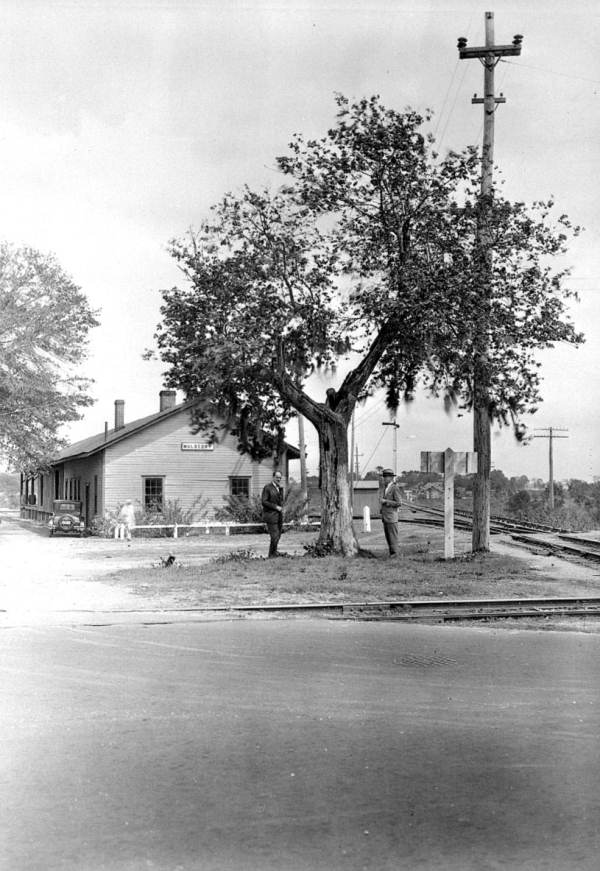
The Mulberry Lynching Tree
The Mulberry Lynching Tree in Mulberry Florida is the site of at least three lynchings during the Jim Crow era. While the original tree has since died, a plaque near its remains offers a sanitized narrative by framing it as a marker of economic progress in the phosphate industry while omitting its connection to lynchings. A nearby museum briefly acknowledges the tree’s history but downplays its significance, presenting it as a unifying community symbol rather than a site of racial terror. Exhibits within the museum further reflect this erasure. For example, one exhibit in the museum includes an uncontextualized display of a 1940s minstrel show in blackface, which normalizes rather than critiques the town’s racial history. The Mulberry Lynching Tree exemplifies how sites of racial violence are rewritten to support a narrative of white progress while neglecting the historical realities of Black suffering.
Selective Memory
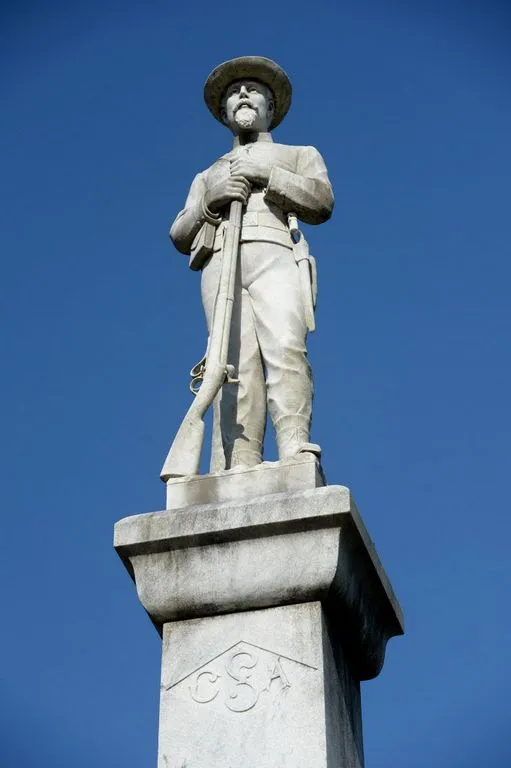
For decades, Munn Park in Lakeland, Florida held a Confederate statue in the center of the park. This statue was removed in 2021, and now the space has been concreted over without any historical markers. Without acknowledging its role in upholding white supremacy, Munn Park continues to obscure its historical significance and continues to not reckon with its racist history. The removal of the statue may mark progress, but the park remains a site of selective memory that upholds white comfort over historical truth.
Lake Ariana, Auburndale
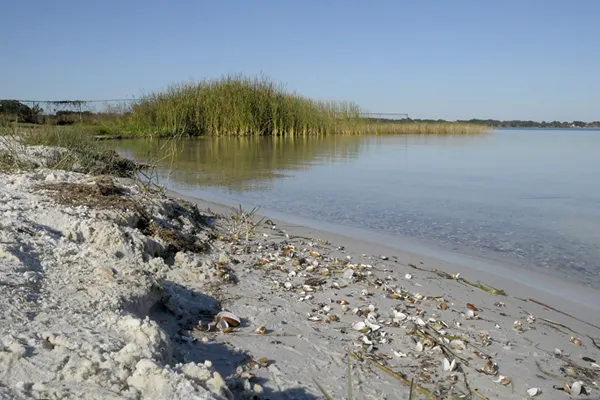
In 1965, 18-year-old Jimmy Earl, a Black high school football star, entered the whites-only waters of Lake Ariana in Auburndale, which challenged segregation. A white man cleared the beach and fatally shot Earl. Today, there are no markers or memorials acknowledging this event. The lack of historical markers allows the beach to remain a space where people can come enjoy the water without having to reckon with this event.

Confronting Invisible and Silent Histories of Racial Violence in Polk County
In 2022 the Lakeland Ledger reported that the African American Historical Museum in Lakeland was seeking to recognize sites throughout Polk County where racialized violence, including lynchings, occurred. According to newspapers and county records, at least 21 men were murdered. In each of the sites where lynchings occurred soil is gathered and put in jars that are displayed at the Legacy Museum of Equal Justice Initiative in Montgomery, Alabama. The African American Museum also endeavors to identify descendants of those who were murdered.
Lynchings terrorized people in Black communities and remained a threat from the Reconstruction era through the Civil Rights years. Through public recognition of lynchings, and murders people learn that these heinous acts were used to maintain white supremacy and assure racial inequality.
List of Lynching Victims in polk county
This list of victims was compiled by the Northwest Social Research Group and identifies 21 deaths in Polk County. All but three were black men; all were killed by white mobs. These names are also included on tombs at the Equal Justice Initiative in Montgomery Alabama, which is dedicated to memorializing lynching victims in every southern state.
Daniel Mann (white), accused of murder, May 15, 1886.
Lon Mann (white), accused of murder, May 15, 1886.
Unidentified Black man, accused of rape, May 25, 1895.
Unidentified Black man, accused of rape, May 25, 1895.
Unidentified Black man, accused of rape, May 25, 1895.
Robert Davis, accused of murder, June 27, 1900.
Frederick Rochelle, accused of rape and murder, May 29, 1901.
Amos Randall (white), accused of murder, May 20, 1903.
Henry Gordon, accused of murder, May 20, 1903.
John Black, accused of murder, July 26, 1906.
Will Hagin, accused of murder, July 26, 1906.
John Bapes, accused of attempted murder, Aug. 20 or 21, 1906.
Jack Wade (aka Jacob Nader), accused of attempted rape, Feb. 13, 1909.
Charles Scarborough, accused of attempted rape, April 28, 1909.
Samuel McIntosh, accused of attempted murder, July 9, 1910.
Lewis Peck, accused of murderous assault, Jan. 12, 1914.
Unidentified Peck companion, accused of “murderous assault,” Jan. 12, 1914.
James Woodson, accused of attempted rape, May 18, 1914.
Henry Scott, accused of insulting a white woman, May 7 or 8, 1920.
William Bowles, accused of making an improper remark to a white woman, March 14,1921.
Ledger reporter Kimberly C. Moore, February 8, 2022